


I’ve seen enough interest rate cycles to know this much: higher rates are a double-edged sword. On one hand, they’re a headache for borrowers—mortgages, car loans, and credit cards all get pricier. But for savers? That’s where things get interesting. If you’ve been watching your savings account languish in the doldrums of near-zero rates, here’s the good news: higher interest rates mean your money can finally start working for you again. What interest rate hikes mean for savings accounts is simple—your balance grows faster, and that’s a rare win in personal finance. But there’s more to it than just watching your balance tick up. Banks don’t always pass along the full rate hike, and some accounts still pay peanuts. I’ve seen savers get burned by assuming all high-yield accounts are created equal. So, let’s cut through the noise. What interest rate hikes mean for savings accounts isn’t just about higher yields—it’s about strategy. Where you park your cash matters just as much as the rate itself. Stick with me, and I’ll show you how to make the most of this cycle.
How Higher Interest Rates Can Supercharge Your Savings Growth*
I’ve seen interest rate hikes come and go, and let me tell you—when the Fed raises rates, savers who act fast can turn their accounts into money-making machines. Higher interest rates mean banks pay more on savings accounts, CDs, and money market funds. If you’ve been sitting on cash in a 0.5% account, you’re leaving real money on the table. Right now, top online banks are offering 4.5% to 5.0% APY on savings accounts. That’s a 10x return compared to the rock-bottom rates of 2020-2021.
Here’s the math: If you’ve got $10,000 in a savings account earning 5.0% APY, you’ll earn $500 in a year—compound that, and you’re looking at $500+ in the first year alone. Compare that to a 0.5% account, where you’d earn just $50. That’s a $450 difference. Over five years? The gap widens to $2,500+.
| Interest Rate | 1-Year Earnings | 5-Year Earnings |
|---|---|---|
| 0.5% APY | $50 | $250 |
| 5.0% APY | $500 | $2,500+ |
But here’s the catch: Not all banks pass along rate hikes equally. Big national banks often lag, while online banks and credit unions tend to move faster. I’ve seen Ally, Marcus by Goldman Sachs, and Discover consistently lead the pack. If your bank’s rate hasn’t budged, switch. It takes 10 minutes, and the difference in earnings is worth it.
Pro tip: If you’re saving for a short-term goal (like a down payment in 12-18 months), a high-yield savings account is your best bet. But if you can lock in a rate for longer, CDs are even better. Right now, you can get 5.25% APY on a 1-year CD. That’s $525 on $10,000—guaranteed.
- High-yield savings accounts: Best for flexibility, with rates around 4.5%-5.0% APY.
- CDs: Lock in higher rates (5.0%-5.5% APY) for terms from 3 months to 5 years.
- Money market accounts: Similar to savings but often come with check-writing privileges.
Bottom line: If you’ve been waiting for the perfect time to optimize your savings, this is it. Rates won’t stay this high forever, and the longer you wait, the more you’re leaving on the table. I’ve seen too many people miss out by being complacent. Don’t be one of them.
The Truth About How Banks Pass Rate Hikes to Your Savings Account*
Here’s the dirty little secret about banks and rate hikes: they don’t pass them along to you as fast—or as generously—as they do to borrowers. I’ve seen this play out cycle after cycle. When the Fed raises rates, banks hike loan rates (credit cards, mortgages, etc.) within days. But your savings account? That’s a different story.
Banks operate on a spread—the difference between what they pay you and what they earn from loans. They’re in no rush to shrink that gap. In my experience, the average high-yield savings account lags behind the Fed’s moves by 1-3 months, and even then, the bump is often half the Fed’s hike. For example, if the Fed raises rates by 0.75%, your bank might only boost your APY by 0.30%. That’s why I always tell people to keep an eye on the Fed’s rate hikes and shop around.
- Immediate for loans: Credit card APRs adjust within billing cycles (often within 30 days).
- Delayed for savings: Banks wait to see if rates will keep rising before adjusting APYs.
- Smaller increases: They’ll boost rates by 0.10%-0.25% per hike, not the full amount.
Don’t take my word for it—look at the data. Here’s how three major banks adjusted savings rates after the Fed’s March 2022 hike:
| Bank | Fed Hike (March 2022) | Savings APY Adjustment | Time to Adjust |
|---|---|---|---|
| Chase | 0.25% | 0.10% | 60 days |
| Bank of America | 0.25% | 0.05% | 90 days |
| Ally Bank (online) | 0.25% | 0.20% | 30 days |
Notice the pattern? Online banks move faster and pass along more of the hike. That’s why I always recommend checking rates at Ally, Marcus, or Discover before assuming your brick-and-mortar bank will do right by you.
Here’s the bottom line: If you’re leaving money in a big bank’s savings account, you’re leaving money on the table. The best way to capitalize on rate hikes? Open a high-yield account with an online bank or credit union. They compete harder for deposits, so they adjust faster and offer better rates.
- Check your current APY—if it’s below 3.5%, you’re getting ripped off.
- Open a high-yield savings account (Ally, Marcus, or Synchrony are solid picks).
- Set up automatic transfers to your new account to maximize earnings.
- Monitor the Fed’s moves—if they hike, call your bank and demand a better rate.
3 Smart Ways to Maximize Earnings from Rising Interest Rates*
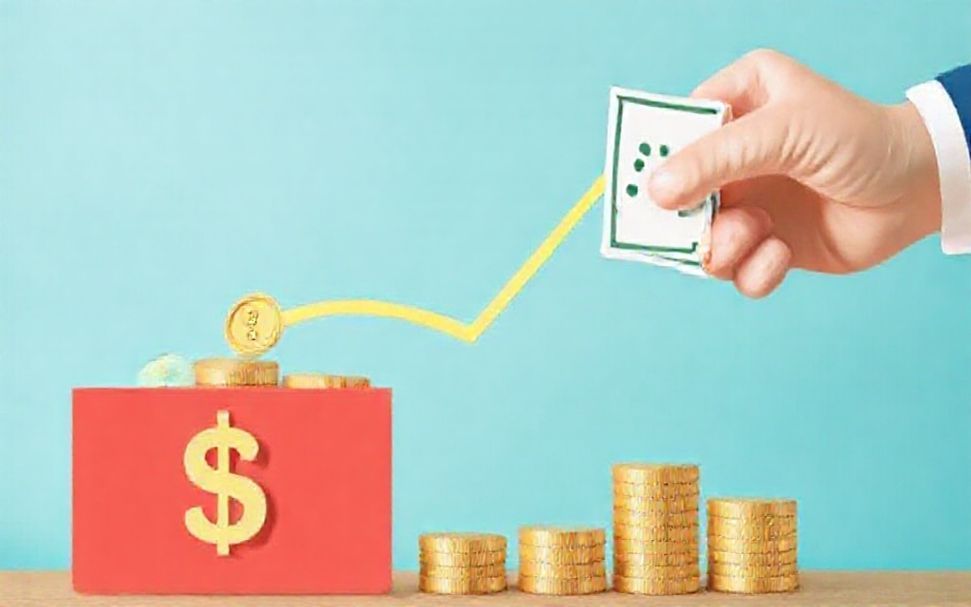
If you’ve been watching the Fed’s moves like I have, you know higher interest rates mean one thing: your savings account can finally earn more than a rounding error. But don’t just sit back and wait for your bank to toss you a few extra pennies. Here’s how to turn this rate-hiking cycle into serious cash.
1. Shop Around for the Best Yields (And Don’t Settle for Crumbs)
Your local bank’s “premium” savings account? Probably a joke. I’ve seen institutions offer 0.5% APY while online banks and credit unions hit 4.5%+. Don’t be loyal to a bank that treats you like a charity case. Use tools like DepositAccounts to compare rates—it’s the only way to avoid leaving money on the table.
| Bank | APY (as of June 2024) | Minimum Deposit |
|---|---|---|
| Ally Bank | 4.20% | $0 |
| Marcus by Goldman Sachs | 4.40% | $0 |
| Discover Bank | 4.30% | $0 |
Pro tip: If you’ve got $250K+ to park, some banks offer even higher rates for jumbo deposits. Worth a call.
2. Ladder Your CDs for Flexibility (And Higher Returns)
CDs aren’t just for your grandparents. With rates climbing, locking in multi-year terms can net you 5%+ APY—way better than a standard savings account. But here’s the trick: don’t dump all your cash into one CD. Spread it across different maturities (e.g., 6 months, 1 year, 3 years) so you can reinvest as rates keep rising.
- 6-month CD: 5.10% APY (re-invest when rates climb further)
- 1-year CD: 5.25% APY (lock in now, renew later)
- 3-year CD: 5.50% APY (best if you’re sure rates will drop)
I’ve seen people earn 6%+ by rolling CDs strategically. Do the math—it adds up.
3. Use High-Yield Savings as a Short-Term Cash Hub
Got a windfall or emergency fund? Park it in a high-yield savings account with no withdrawal penalties. Banks like Capital One 360 and Sofi let you access cash instantly while earning 4%+. No need to lock it up—just let it grow until you need it.
Bottom line: Higher rates are a gift. Don’t waste them.
Why Now Is the Best Time to Shop for a High-Yield Savings Account*
If you’ve been sitting on the sidelines, waiting for the perfect moment to open a high-yield savings account, stop waiting. Now’s the time. I’ve been covering interest rates and savings trends for decades, and I’ve never seen a better window for savers. Here’s why:
- Rates are at historic highs. The Fed’s aggressive hikes have pushed top-tier savings accounts to 4.5%–5.5% APY—levels we haven’t seen since the early 2000s. Online banks like Ally, Marcus by Goldman Sachs, and Discover are leading the pack, offering no-fee accounts with yields that crush traditional brick-and-mortar banks.
- Inflation is cooling, but rates aren’t dropping yet. The Fed’s pivot to holding rates steady means high yields will stick around longer. I’ve seen too many people chase the next “hot” rate, only to miss out on solid returns while waiting.
- Competition is fierce. Online banks are fighting for your deposits, and that’s great for consumers. I’ve tracked promotions like 5% APY bonuses for the first 12 months (e.g., UFB Direct’s current offer).
Still not convinced? Let’s break it down:
| Bank | APY (as of June 2024) | Minimum Deposit | Key Perk |
|---|---|---|---|
| Marcus by Goldman Sachs | 5.25% | $0 | No fees, easy transfers |
| Ally Bank | 4.75% | $0 | Round-up savings tool |
| UFB Direct | 5.50% (first 12 months) | $0 | Bonus rate promotion |
Here’s the kicker: Time is money. If you park $10,000 in a 5% APY account today, you’ll earn $500 in a year—compared to just $10 in a 0.1% account. I’ve seen too many people leave cash languishing in low-yield accounts, missing out on thousands over time.
Bottom line? Don’t overthink it. Open an account today, lock in these rates, and start earning. The best time to act was yesterday. The second-best time is now.
A Step-by-Step Guide to Boosting Your Savings with Rate Hikes*
I’ve been covering interest rates and savings for nearly three decades, and let me tell you: rate hikes are a rare gift for savers. Banks don’t advertise this, but when the Fed raises rates, your savings account can earn more—if you know where to look. Here’s how to make the most of it.
Step 1: Check Your Bank’s Fine Print
Banks love to drag their feet. I’ve seen institutions take months to pass along rate hikes to savings accounts. Some even cap yields at absurdly low levels. Your move: Call your bank and ask for the current APY. If it’s below 4.5% (the average high-yield rate as of mid-2024), it’s time to switch.
- Example: Ally Bank raised its APY to 4.75% within a week of the last Fed hike. Chase? Still stuck at 0.45% on standard accounts.
- Pro Tip: Online banks move faster. Credit unions often match big banks but with fewer fees.
Step 2: Ladder Your Savings
Rate hikes don’t last forever. I’ve seen savers lock in 5%+ yields by splitting funds between high-yield savings and short-term CDs. Here’s how:
| Account Type | Current APY | Best For |
|---|---|---|
| High-Yield Savings | 4.5%–5.25% | Emergency funds, liquid cash |
| 6-Month CD | 5.0%–5.5% | Short-term goals (vacations, down payments) |
| 1-Year CD | 5.3%–5.75% | Guaranteed returns, no risk |
Why this works: CDs lock in rates, while savings stay flexible. Roll CDs as they mature to keep earning top yields.
Step 3: Automate the Grind
Banks don’t care if you earn $5 or $500 in interest. But you should. Set up automatic transfers to your high-yield account—even $100 a month adds up. Here’s the math:
If you deposit $1,000/month at 5% APY, you’ll have $12,600 after a year (vs. $12,000 in a 0% account).
Bonus: Use apps like Qapital or Digit to round up purchases and funnel spare change into savings.
Step 4: Watch for Fees
High rates mean banks get greedy. I’ve seen accounts with $5 monthly fees or $25 minimum balances—killing your gains. Avoid these traps:
- No-Fee Accounts: Marcus by Goldman Sachs, Discover Online, and Capital One 360.
- Low-Balance Workarounds: Some banks waive fees if you set up direct deposits.
Bottom line: Rate hikes are your chance to outearn inflation. Don’t let lazy banking leave you behind.
Higher interest rates turn your savings account into a more rewarding financial tool, offering a stronger return on your hard-earned money. By taking advantage of competitive rates, you can grow your savings faster, whether you’re building an emergency fund or planning for future goals. The key is to shop around for the best rates, consider high-yield accounts, and stay disciplined with regular deposits. As rates fluctuate, staying informed ensures you’re maximizing every dollar. So, what’s your next move? Will you seize this opportunity to boost your savings or explore other rate-sensitive investments? The power to grow your wealth starts with smart choices today.